
This initiative focuses on ensuring a clean, safe, and healthy environment for students.
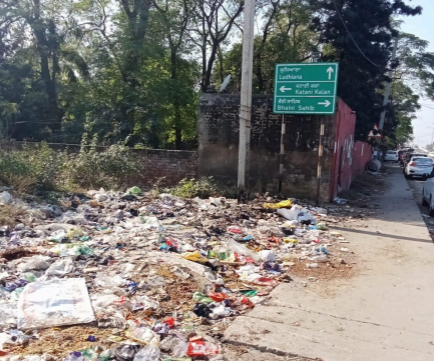
We visited various cities and towns across Punjab and observed that heaps of garbage are piled up outside educational institutions and hospitals. This waste is environmentally toxic and harmful to children, and there are no concrete arrangements in place for its proper disposal. As a result, pollution is increasing day by day.
We also visited several areas where it was found that garbage dumping has increased to a very large extent.
Children are more vulnerable than adults to pollution and infections. Dumps release:
These can cause or worsen:
Open dumps also attract rats, flies, stray dogs and mosquitoes, spreading dengue, malaria, leptospirosis, rabies, typhoid, etc.
Schools are legally meant to be safe zones. Dumping garbage next to them:
This contradicts the spirit of the Solid Waste Management Rules, 2016, which require waste to be handled in a way that prevents public nuisance and protects health, especially of children.
Garbage dumps often self-ignite due to methane buildup or burning of waste. That means:
Daily exposure to filth:
Dumps contaminate:
Open waste causes:
Bad odour, smoke, pests, and noise:
A school cannot function properly next to a dump.
Solid Waste Management Rules, 2016 – prevent public nuisance and health risk
Environment (Protection) Act, 1986
Right to Life under Article 21 (clean environment = fundamental right)
National Green Tribunal directions in solid waste cases (including Almitra Patel vs Union of India)
Municipal bodies cannot claim lack of funds or space as an excuse for exposing children to harm.
Waste dumps located outside school premises pose serious and proven risks to children’s health, safety, psychological wellbeing, and learning environment. In compliance with the Solid Waste Management Rules and the constitutional right to a clean and safe environment, the dump must be urgently removed and waste must be managed scientifically away from
educational institutions.
Violations by municipalities need to be taken seriously and effectively.
Key NGT case :
Almitra Patel vs. Union of India (2014–2018): Strict standards for waste management.
Dumping of waste in open areas adjoining schools.
Burning garbage near schools.
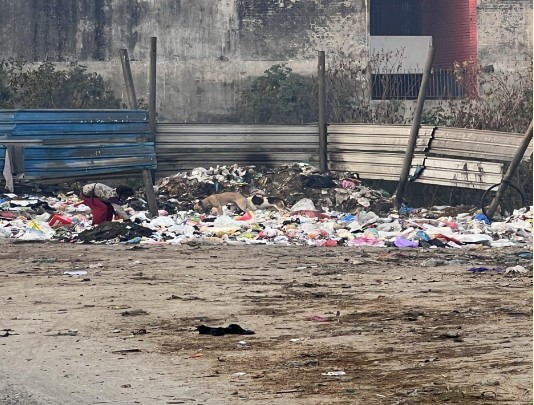
Creating secondary garbage points that cause nuisance or health hazards. We've noticed that various secondary garbage points have been created in towns and cities.
Various villages, towns, cities of Punjab depicting non implementation of Solid Waste Management.
%20(1).jpg)


.png)
.png)

Vatrukh Foundation believes in citizens outreach programme, involvement of stakeholders, research based solutions. Community participation for implementation to drive fair, lasting change in society.

Your support helps us reach people in need faster, continue relief work, and make a lasting difference.
Vatrukh Foundation empowers citizens with tools like petitions, research, and outreach so they can engage with decision-makers, hold them accountable, and drive fair, lasting change in society.


.png)
.png)
.png)
